
The Violence of Interpretation
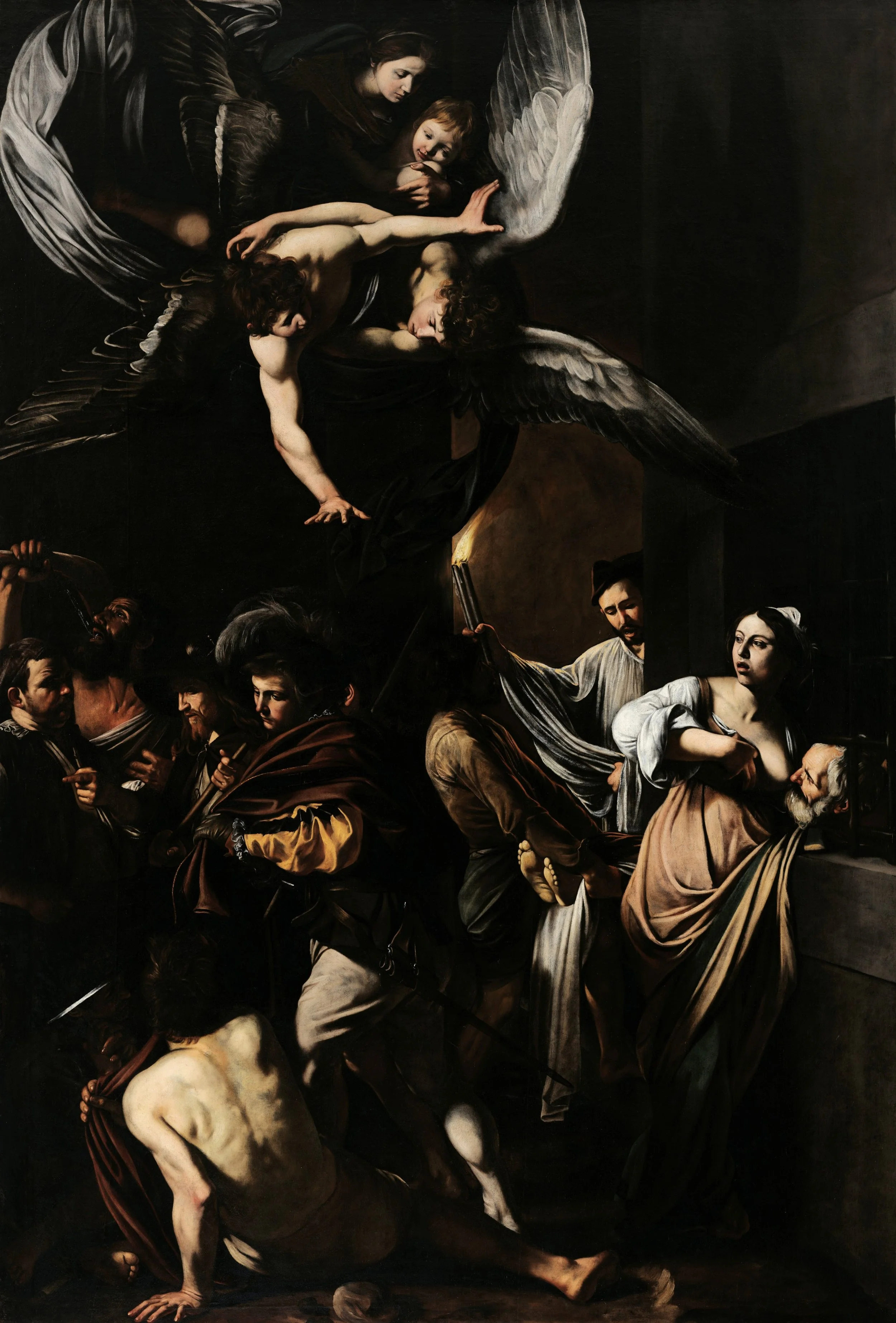
The Seven Works of Mercy
The Seven Works of Mercy (Italian: Sette opere di Misericordia), also known as The Seven Acts of Mercy, is an oil painting by Italian painter Caravaggio, circa 1607. The painting depicts the seven corporal works of mercy in traditional Catholic belief, which are a set of compassionate acts concerning the material needs of others.
The painting was made for, and is still housed in, the church of Pio Monte della Misericordia in Naples. Originally, it was meant to be seven separate panels around the church; however, Caravaggio combined all seven works of mercy in one composition which became the church's altarpiece. The painting is better seen from "il coretto" (the little choir) in the first floor.
There is a kind of violence in needing to understand everything.
We’ve learned to approach art like it’s a test we might fail. We stand in front of a canvas and immediately go for the cheat sheet. Read the wall text first., make sure we know what we’re supposed to think. Then look. Then photograph. Then leave.
But in dissecting beauty until it bleeds out on the table, with every brushstroke pinned and labeled, and every feeling translated into theory, we lose the very thing we came for.
Art isn’t meant to be mastered. It’s meant to be felt.
Lessons from Caravaggio
Caravaggio understood this better than anyone. His paintings don’t ask to be understood, they demand to be felt. He used a blinding light that slashes through darkness, revealing the bruised tenderness of his saints and the real faces of people you might pass on the street.
He made holiness human, and humanity holy.
Seeing the Brutality
Look at Seven Works of Mercy. Everything is happening at once in the darkness: a corpse being carried, an innkeeper, a beggar, a saint. It’s illuminated by a light that strips everything bare.
There are so many stories unfolding at once, compassion, struggle, hunger, redemption, but if you try to explain it, it slips through your fingers. You can only stand before it and feel the chaos settle into awe.
He painted real people. Not idealized saints. Not marble perfection. He gave us dirty feet, wrinkled skin, the face of someone who’s actually suffered.
This is humanity, beautiful and brutal at the same time.
The Space Between Knowing and Surrender
The real violence isn’t in the art; it’s in our insistence on taming it.
There is a fragile space between knowing and surrender, and that is where art breathes. That’s where we do, too.
Take The Death of the Virgin. Mary’s body is shown as swollen, real, and dead in a way that made the church reject the painting at the time. It was too human. It looked too much like an actual corpse.
Caravaggio didn’t soften it. He painted death the way death looks, and grief the way grief feels.
Theory Comes After
Don’t get me wrong: art history matters. Theory matters. Context matters.
But it comes after
Context adds something; it deepens the experience. But it can never replace what you felt in that first moment of contact. Art wasn’t made for art historians. It was made for people.
It was made for the person standing in a church in 1606, or a gallery in 2026, who has lost someone. For the person who knows what it looks like when a body is just... a body.
Understanding the symbolism, the technique, and the historical moment is just another way of loving the work. But it’s not the only way. And it’s certainly not the first way.
Caravaggio’s light doesn’t explain everything. It simply reveals what’s there and leaves you to feel your way through the darkness.
